

Cities are shaped over time. What begins as open land gradually becomes neighborhoods, business districts, and destinations that generations come to know as part of everyday life.
For 95 years, Ortigas Land has been part of that evolution. From its early beginnings to the development of residential communities, commercial districts, and lifestyle destinations, its story reflects the changing landscape of Metro Manila. This visual timeline revisits the milestones that have defined the company’s journey and the places that continue to shape everyday life for generations of Filipinos.
The beginnings: The Foundation of a Lasting Legacy

The Hacienda de Mandaloyon, an impressive 4,033-hectare estate, was acquired on January 20, 1920. What was once an expansive tract of land would eventually become home to thriving communities across Mandaluyong, San Juan, Pasig, and Quezon City.

Six visionary gentlemen—Francisco Ortigas y Barcinas, Vicente Madrigal, B.C.M. Johnston, Fulgencio Borromeo, Clyde A. Dewitt, and Manuel L. Quezon—recognized the estate’s long-term potential and shared a dream of creating communities that would grow alongside a changing city.
To bring that vision to life, they formed the partnership “Ortigas, Madrigal y Cía., S. en C.” on July 10, 1931, laying the foundation for what would become one of the country’s enduring real estate companies.
1930s: Drawing the First Master Plan

Ortigas & Company set out to develop and sell the Mandaloyon Estate as a progressive industrial, commercial, and residential urban complex. Advertisements from the 1930s reflected this long-term vision for a master-planned community that was ahead of its time.

The acquisition of the Hacienda de Mandaloyon laid the groundwork for the establishment of Ortigas & Company, Limited Partnership in 1931, providing the framework for the company’s future growth and development.
1940s: Building the Foundations
Plans for what would become the 108.3-hectare Ortigas Center reflected the company’s long-term vision of creating a dynamic urban district alongside the company’s expanding developments.

Riverside Industrial Area, located along the Pasig River, played an important role in the Philippines’ post-war industrial growth, with modern manufacturing facilities, including flour and steel mills, established to support the country’s economic recovery.

Drainage pipes were installed during the development of Pioneer Street in Pasig, reflecting the infrastructure investments that supported the area’s continued growth.

Road paving in the Little Baguio area formed part of the residential development works that helped prepare the area for expanding communities.
1950s: Communities Begin to Take Shape
The Rizal Provincial Capitol was inaugurated on October 28, 1950, with President Elpidio Quirino delivering the keynote address, marking an important milestone in the area’s civic development.


A 20-hectare land donation made possible the construction of the Rizal Provincial Capitol on the site where Estancia and Capitol Commons now stand, reflecting Ortigas & Company’s support for public institutions and community growth.
The development of the nearby Capitol subdivisions complemented the area’s continued transformation, creating residential opportunities with key civic landmarks.
Community planning extended beyond residential developments, with schools, churches, hospitals, and commercial areas incorporated into the estates to support the growing needs of communities designed to serve future generations.


As the company continued to grow, so did the people behind it. By this period, Ortigas & Company had grown to around 100 employees, reflecting the people behind the company’s expanding operations and the long-standing collaborative effort within the Ortigas family.
1960s–1970s: A New Urban Lifestyle Emerges
By the mid-1960s, Greenhills Shopping Center introduced a new retail concept, bringing together a supermarket, movie theater, variety stores, bowling alley, service shops, and restaurants in one destination.

Greenhills Shopping Center and Theater became a defining landmark of modern retail, with its spacious interiors and contemporary architecture that reflected the changing lifestyle of the period.


Aerial photographs from the early 1970s captured the rapid growth of Greenhills Shopping Center and the surrounding subdivisions, together with established schools such as La Salle Green Hills, Xavier School, Immaculate Conception Academy, and Poveda, as well as the neighboring Wack-Wack subdivision and golf course.

Ortigas & Company envisioned communities where homes were complemented by essential services and everyday conveniences. Schools, churches, hospitals, post offices, police stations, reliable water supply, and private sports and golf clubs were integrated into its developments, while the economic boom of the 1970s accelerated residential growth across Pasig and Quezon City, including Valle Verde and Greenmeadows.

The Ortigas family donated the Northern Police Sub-Station in Libis in support of urban development and public safety as surrounding communities expanded.


During the 1970s, rapid residential development continued across Pasig and Quezon City, with Valle Verde and Greenmeadows emerging as some of the company’s fast-growing communities.

The Valle Verde subdivisions—Phases I, II, III, IV, and V—were developed beside the growing business district, reflecting the area’s transformation into an integrated urban community.

Completed in 1971, the Ortigas Building became an engineering landmark, featuring a rolling foundation and earthquake-resistant design that demonstrated innovative thinking in high-rise construction.

As Metro Manila continued to expand, Ortigas Center experienced sustained construction activity throughout the nationwide economic expansion, reinforcing its emergence as one of the country’s premier business districts.
1980s–2000s: A District Comes Into Its Own


Greenhills Shopping Center continued to evolve into one of the country’s leading destinations for shopping, dining, entertainment, and tourism, while earning global recognition as a center for pearls and value shopping.


Ortigas Center emerged as a thriving commercial district, with landmark buildings such as the Ortigas Building at the corner of Ortigas and Meralco Avenues, the Benpres Building along Meralco Avenue and Exchange Road, and the Padilla Building on Don Francisco Ortigas Jr. Avenue defining the Metro Manila skyline. During this period, Strata 100 and the Philcomcen buildings became among the district’s tallest structures.


The retail landscape across the Ortigas-developed areas of San Juan, Pasig, and Mandaluyong also continued to grow. Greenhills Shopping Center, SM Megamall, Robinsons Galleria, and the Shangri-La complex collectively offered approximately 750,000 square meters of retail space, further strengthening Ortigas as a shopping and business destination.

Alongside its developments, corporate social responsibility remained an integral part of the company’s commitment to the community through various outreach programs and relief initiatives.
2000s TO TODAY: Continuing the Ortigas Way
As lifestyles evolved, so did Ortigas Land’s vision of community-building. Through thoughtfully planned estates, the company continues to create places where people can live, work, shop, and connect, while celebrating Filipino culture, creativity, and innovation.

Ortigas East – anchored by Tiendesitas, this master-planned estate integrates residential, commercial, office, and lifestyle spaces, offering a dynamic environment for residents, businesses, and visitors.

Circulo Verde – designed around open spaces and the Marikina River, Circulo Verde combines nature with contemporary urban living, creating a community that balances accessibility with a greener environment.

Greenhills Center – ongoing redevelopment continues to strengthen Greenhills as a premier destination for shopping, dining, entertainment, and tourism, while reinforcing its long-established reputation as a center for pearls and value shopping.


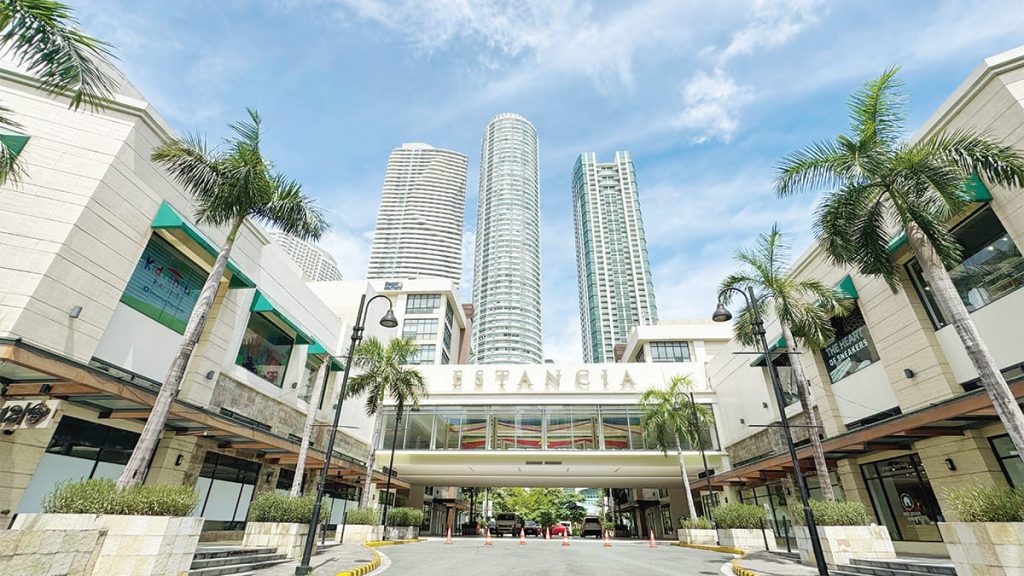
Estancia and Capitol Commons – once home to the historic Rizal Provincial Capitol, the estate has evolved into a mixed-use destination that blends contemporary living, retail, dining, and leisure experiences while honoring its rich heritage.

Costa Calatagan – Set along the shores of Calatagan, Batangas, this emerging resort-residential development embraces nature and wellness, offering a coastal community designed to celebrate the area’s natural surroundings and relaxed way of life.
Beyond the Timeline
Over the past 95 years, Ortigas Land has grown alongside the communities it helped shape, leaving a lasting imprint on Metro Manila’s evolving urban landscape. From residential neighborhoods and commercial centers to mixed-use estates, each milestone reflects a continuing commitment to building places that respond to the changing needs of every generation.
As Metro Manila continues to evolve, the company’s legacy offers a reminder that cities are never finished. They continue to be shaped by the decisions made today, just as they were nearly a century ago, leaving spaces that future generations will one day look back on as part of their own shared history.
#BrandedUp