

As economic pressures, rising costs and climate-related challenges continue to shape daily life, the way communities are planned is gaining renewed relevance. Increasingly, convenience is no longer viewed as a lifestyle perk but as a practical advantage—one that can help people save time, reduce stress and navigate everyday routines more efficiently.

This shift has brought greater attention to walkable, mixed-use communities where essential destinations are located closer to where people live. For Ayala Land, this approach has long been embedded in the design of its estates, creating environments that support daily needs through accessibility and connectivity.
The measurable cost of distance
The importance of proximity becomes clearer when viewed through the realities of urban mobility. According to mobility advocates and transport researchers, 94% of Filipinos rely on walking and public transportation, highlighting the role of pedestrian-friendly infrastructure in daily travel.

At the same time, traffic congestion continues to impose high economic and social costs. Urban planners have estimated that Metro Manila loses around P3 billion each day due to congestion, driven by lost productivity, delayed movement of goods, and lengthy travel times. Beyond economics, long commutes can also affect quality of life by increasing stress and reducing time available for rest, family, and personal pursuits.
Against this backdrop, designing communities where everyday destinations are within easy reach has become an increasingly practical solution rather than a long-term aspiration.
Walkability delivers tangible returns
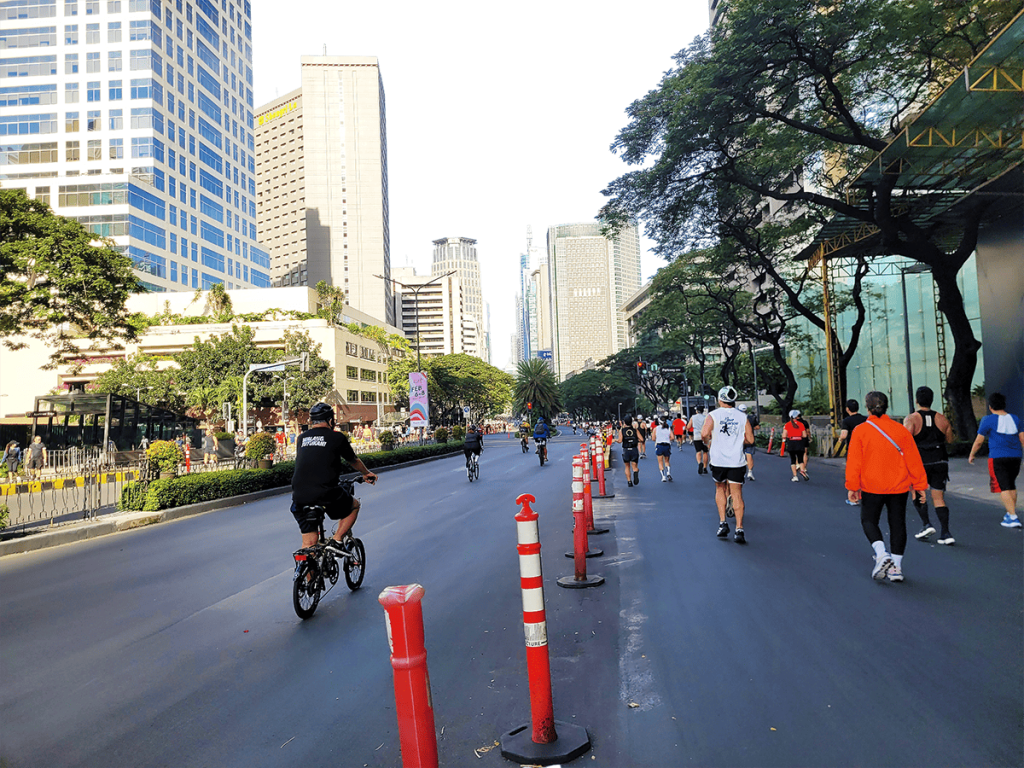
Research continues to link walkable neighborhoods with a range of benefits, from improved health outcomes to stronger local economic activity and lower environmental impact. When daily errands can be completed on foot, residents are more likely to stay active, while nearby businesses benefit from regular pedestrian traffic.

Reducing dependence on short car trips also contributes to lower emissions, particularly in densely populated urban areas where transportation remains a major contributor to environmental challenges.
These principles are reflected across Ayala Land’s estates, where residential, commercial, and institutional components are planned together to support more efficient movement and everyday convenience.
The 15-minute city: From concept to operational reality
The idea behind the “15-minute city” is simple: workplaces, schools, healthcare facilities, retail establishments, parks, and other daily essentials should be accessible within a short walk or bike ride. The success of the model, however, depends not only on proximity but also on how these uses are integrated within a community.

Ayala Land has adopted this planning approach across several developments, adapting the concept to local conditions. In Makati Central Business District and Bonifacio Global City, residential towers, offices, retail destinations, educational institutions, and open spaces are clustered within compact urban districts, helping lessen the need for long cross-city travel.

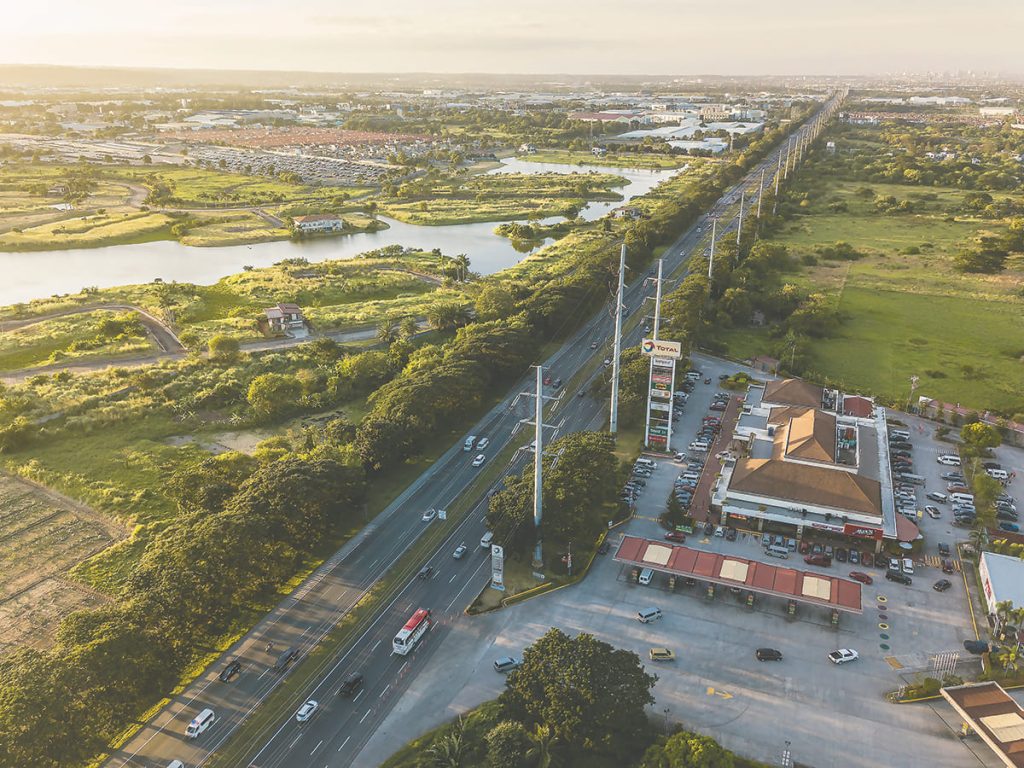
The same principle extends beyond Metro Manila. In Nuvali, Ayala Land’s largest eco-city estate in Laguna, residential areas, workplaces, schools, hospitals, retail centers, and recreational facilities are connected within a masterplanned community supported by dedicated pedestrian and cycling networks.
Other developments, including Vertis North in Quezon City, Arca South in Taguig and Vermosa in Cavite, are likewise being shaped as mixed-use districts where living, working and commerce coexist within walkable environments connected to the broader metropolitan area.
Mobility that strengthens everyday resilience
Accessibility relies not only on distance but also on reliable transportation systems. To support this, Ayala Land integrates transport facilities into its developments through organized loading zones, point-to-point services, transport hubs and pedestrian-oriented design that address last-mile connectivity.

One example is the One Ayala Transport Terminal in Makati, which combines public transportation links, P2P services and pedestrian access within a single hub, helping improve commute efficiency and predictability.
Similar transport-oriented features are incorporated into developments such as Vertis North, Nuvali, Vermosa, and Cebu Business and I.T. Parks, helping residents and workers remain connected even during periods of disruption.
Everyday convenience as quiet luxury
Urban planners increasingly describe walkability as a form of “quiet luxury”—one measured not by extravagance but by the time it gives back to people.

Shorter trips mean fewer hours spent in traffic, less uncertainty in daily schedules, and more opportunities to focus on work, family, and leisure. Features such as active ground-floor spaces, shophouses and street-level retail further contribute to this convenience by placing everyday services within easy reach while helping create vibrant and active neighborhoods.
The result is an environment where daily routines become simpler, reducing the need for constant travel and creating more room for meaningful activities.
Cities built for resilience

Studies on urban resilience suggest that communities with shorter travel distances, integrated land uses, and decentralized access to services are often better equipped to respond to economic shifts and climate-related disruptions.
Through its network of 53 sustainable estates nationwide, Ayala Land has expanded this planning model beyond traditional business districts and into emerging growth centers. By embedding accessibility and convenience early in the development process, these communities are positioned to remain functional and adaptable as surrounding areas continue to grow.
Convenience as a safe harbor
In the long run, one of the most valuable attributes of a city may be its ability to make daily life predictable and manageable.

Walkable, 15-minute communities help reduce dependence on long commutes while supporting health, productivity and environmental sustainability. As urban challenges continue to evolve, developments that place essential services closer to residents are increasingly defining what modern city living looks like.
Across its estates, Ayala Land continues to advance this approach—creating communities where daily necessities are not simply available, but consistently within reach.
#PropertyPR #MediaRelease