

Pueblo de Oro’s evolving estates demonstrate how integrated communities can anchor growth across emerging Philippine city corridors
When Pueblo de Oro Development Corporation began developing its uptown estate in Cagayan de Oro in 1995, the goal was straightforward: to build a masterplanned township that could grow alongside the city it served.
At the time, the site lay at the fringe of the urban core. Three decades later, as the city expanded outward, the estate now sits at the center of Cagayan de Oro’s continued growth — a clear example of how long-term planning can gain ground as cities evolve.
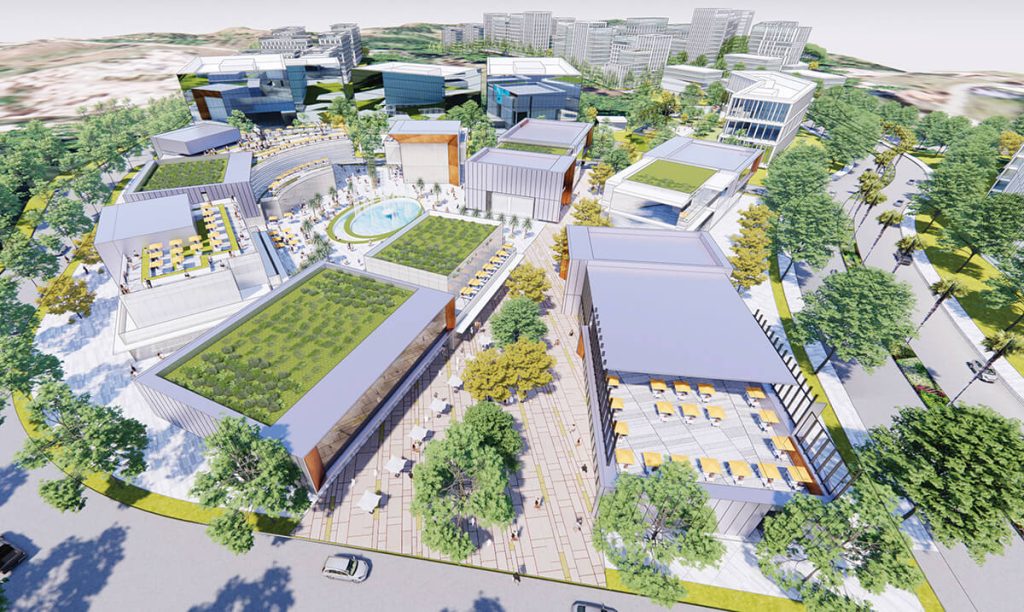
What began as a township has since matured into a layered mixed-use environment where residential neighborhoods, business spaces, recreation, and institutions function as an integrated system supporting everyday life. In doing so, the development has become more than a community—it has emerged as an urban anchor shaping how the city grows.
Townships are often marketed as complete environments from the outset. In reality, their true value unfolds over time. Success depends not simply on assembling components, but on how effectively they connect—how residential, commercial, and social elements reinforce one another as a coherent whole.
This dynamic has long been recognized in the real estate sector. In its 2013 report Emerging Trends in Real Estate Asia Pacific, consultancy Jones Lang LaSalle observed that mixed-use developments tend to perform more sustainably when planned as interconnected ecosystems rather than isolated projects.
An urban anchor in Cagayan de Oro

Cagayan de Oro offers a tangible illustration. Pueblo de Oro’s estate has built a stable residential base through its villages, while commercial components—particularly within the Pueblo de Oro Business Park—have attracted offices, schools, and service establishments. The result is continuity: a place where people can live, work, and meet daily needs within a single area.

As these layers developed, the estate began functioning as a broader urban node—supporting employment, drawing investment, and strengthening the city’s uptown corridor. Recreational facilities such as the Pueblo de Oro Golf & Country Club further enhance its role, serving both residents and visitors while contributing to local tourism.
Equally significant is the ripple effect beyond the estate itself. Surrounding areas have seen steady improvements in infrastructure, utilities, and public services, encouraging further investment and shaping the evolution of adjacent communities.
“What we are building today goes beyond individual townships,” said Guillermo Luchangco, Chairman & CEO of Pueblo de Oro Development Corporation. “We are creating integrated urban platforms where residential, commercial, and community components come together to support daily life and applying that model across different regions as new city centers emerge.”
Scaling the model across growth corridors

Lessons from Cagayan de Oro have informed the company’s approach in other growth areas. South of Manila, Pueblo de Oro Townscapes Malvar in Batangas applies the same principles more deliberately from the outset. Positioned within a fast-growing industrial zone, the development follows a “work-live-play-learn” concept designed to allow daily life to unfold within the community itself.
Residents gain proximity to workplaces, retail services, leisure spaces, and educational institutions—a structure that supports more balanced lifestyles while reducing reliance on long commutes. At the same time, the project responds to expanding industrial activity in the Malvar–Lipa corridor, providing much-needed housing and commercial opportunities.
Its influence extends beyond its boundaries. Activity generated within the estate contributes to economic growth in neighboring municipalities, strengthening connections across the wider Batangas region and reinforcing the corridor’s role as a key growth area.
Similar integrated developments are taking shape in Cebu, where Pueblo de Oro combines residential, commercial, and lifestyle components to meet evolving urban demand. In Pampanga, the company adopts a more targeted strategy—aligning residential and commercial projects with key expansion corridors, complementing its larger township developments elsewhere.
Across these locations, a consistent philosophy emerges: creating cohesive environments where people can live, work, learn, and interact within well-planned settings. When these elements align, developments do more than accommodate growth — they help organize it, guiding how communities function over time.
In regional centers such as Cagayan de Oro and fast-rising provinces like Batangas, Cebu, and Pampanga, projects of this scale increasingly act as extensions of the urban core. As infrastructure improves and businesses cluster around them, they transition from standalone enclaves into integrated city districts.
Viewed through this lens, Pueblo de Oro’s trajectory reflects a broader shift in Philippine real estate — from building isolated townships to shaping interconnected urban platforms across multiple regions.
Ultimately, the measure of success lies not in how a development launches, but in how it endures. From Mindanao to Luzon and the Visayas, Pueblo de Oro’s projects show how patient planning, steady execution, and a long-term vision can steadily gain ground — shaping communities today while helping define the cities of tomorrow.
#BrandedUp