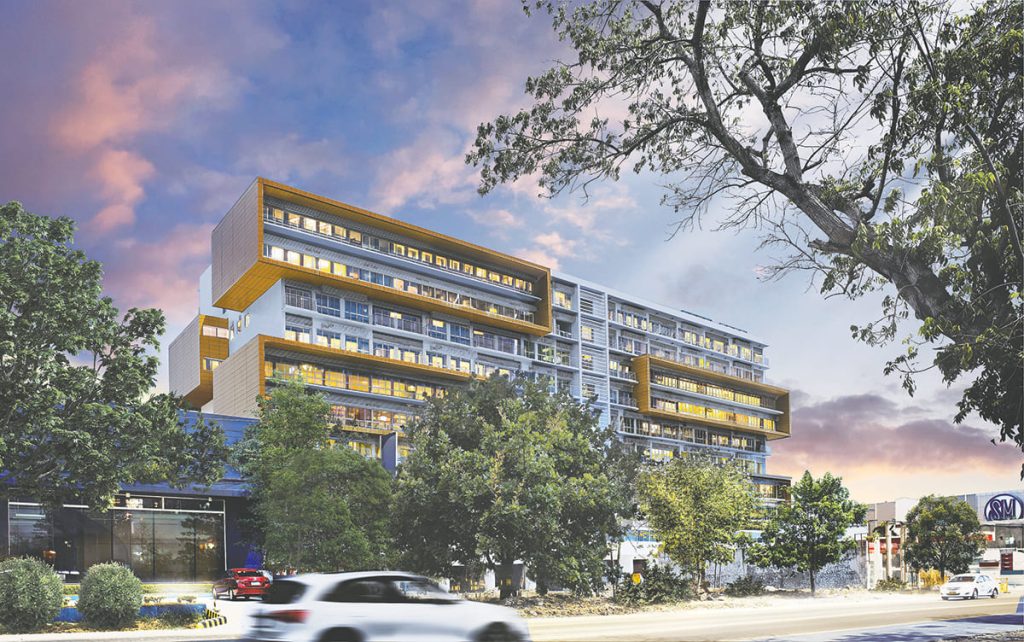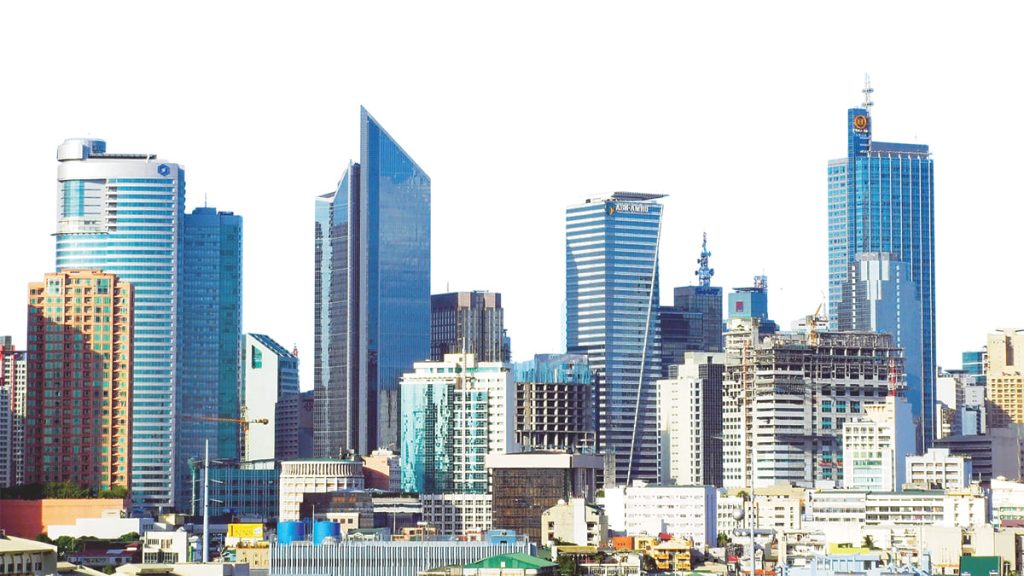


Whenever I am asked what Philippine real estate will look like 25 years from now, I ask back if they have been to Bonifacio Global City (BGC). I always tell them that BGC was a huge grassland inside a military camp 25 years ago. I would fondly tell them that I led the team that exclusively leased one of the first office buildings in BGC–then called the Total Corporate Center. Expect that exact transformation–bare land turned into a fully realized, master-planned central business district (CBD) to repeat itself over the next 25 years, but this time in the townships and emerging cities already rising today. That is Philippine real estate by 2050, and the transformation will be fueled by a growing Philippine economy, more developed regions outside the National Capital Region (NCR), and better infrastructure.
Economically, income growth will expand the market for residential properties. The Philippines is at the cusp of reaching upper-middle-income status–$4,470 GNI per capita versus a $4,496 threshold–and the most credible 2050 projections range from $12,500 to $18,000 income per capita. With sufficient land outside of Metro Manila, residential demand will keep skewing toward middle-market, township-based horizontal rather than luxury vertical developments. This flight to quality homes outside of NCR is already observed in BSP’s Q4 2025 Residential Property Price Index (RPPI), where all areas outside AONCR after the pandemic have risen in prices by almost 50%, and the number of loans granted has sequentially grown due to resilient demand.
Office space will not shrink but will evolve. Artificial intelligence (AI) already exposes more than a quarter of Philippine jobs, or 12.7 million at current count to automation based on the International Labor Organization’s February 2026 policy brief, concentrated in the IT-BPM sector that anchors most Grade-A office demand. Expect Global Capability Centers (GCCs) to keep taking up space, but for AI-augmented, ESG-certified space. Older, undifferentiated BPO stock slowly faces obsolescence. Our labor force will have to adapt.
Industrial and logistics real estate will be a structural winner, but the geography of “outside Metro Manila” is itself shifting. Semiconductor investment under the Pax Silica framework, an AI-native hub in New Clark City, and US $5.63 billion in renewable energy projects certified in early 2026 alone are concentrating land-intensive demand along the Luzon Economic Corridor–effectively folding Pampanga, Bulacan, Cavite, and Laguna into an expanded Metro Manila, connected by rail and expressways.

Brisk regional decentralization, meanwhile, is further down south. Metro Cebu now counts at least 13 master-planned townships, with a rising share of the country’s office, residential, warehouse, and hotel pipeline. Davao is following a similar arc, backed by new bridges, airport expansions, and bypass roads. Their growth is the clearest evidence that confidence in building outside Metro Manila and outside Luzon altogether is no longer experimental but essential to the country’s economic growth. This corresponds to the 100 new cities needed for a population of 140 million, with 70% of them living in urbanized settings by 2050, according to Palafox and Associates.
All of this will run on infrastructure that is already underway and still to be built. Although Philippine infrastructure still lags globally and the 2025 flood-control corruption scandal is a live reminder that corruption–not capital–may be the most limiting constraint, we expect much-needed infrastructure to be in place and considered a key element of national development. In 25 years, an expanded Luzon Spine Network will be fully operational and will be replicated in Metro Cebu, Metro Davao, and across the country, becoming engines of economic and social growth.
Against regional peers, the realistic economic posture is convergence, not parity. Malaysia’s three-decade stall just below the high-income line is the more realistic goal, while Vietnam’s FDI-driven manufacturing boom is the more useful playbook for the country’s industrial real estate. A combination of these two countries’ economic templates will be instructive to the Philippines’ economic development for the next two decades.
The real estate industry picture 25 years from now? Higher quality homes outside NCR, more AI and technologically adapted commercial office spaces, an expanded Metro Manila in terms of economic power, and a genuinely multi-regional Philippines with today’s emerging townships, grassland, and rice fields standing in for what BGC once was, waiting for their turn to become someone’s 15-minute walkable and environment-friendly CBD.
#PhilSTARPropertyFeature
#FeaturedStory