

Insights from Rafael Fernandez de Mesa on how industry-anchored estates are shaping the Philippines’ growth corridors and communities
As urban development evolves beyond traditional residential and commercial projects, a different kind of township model is expanding across the country—one built not just around homes and lifestyle spaces, but around economic activity and job creation.
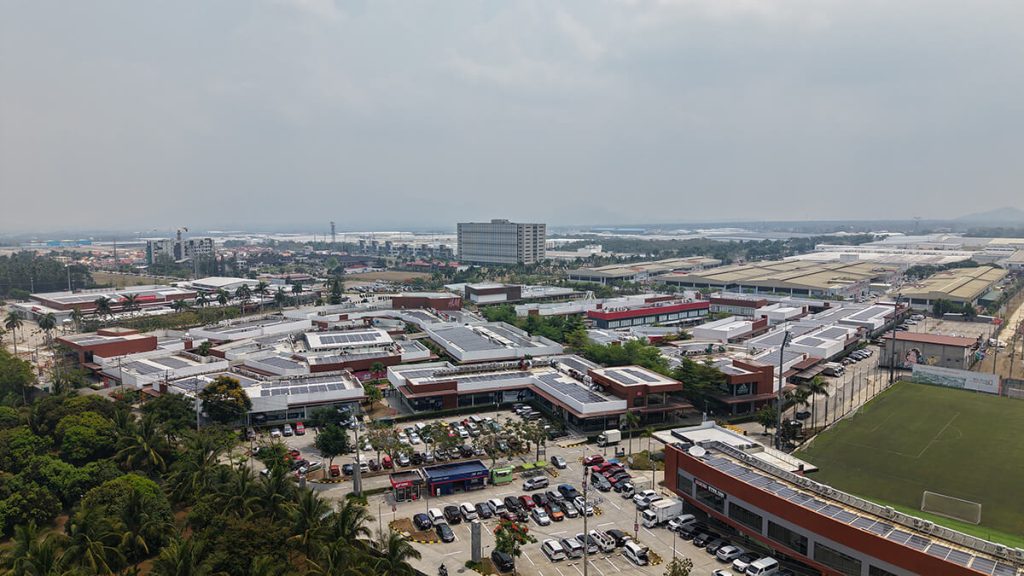
PhilSTAR Property spoke with Rafael Fernandez de Mesa, President and CEO, Aboitiz Economic Estates and Aboitiz Land, during a tour of LIMA Estate in Batangas, where bustling industrial, commercial, residential, and lifestyle spaces offered a firsthand look at how industry-anchored townships are evolving into thriving integrated communities.

For Fernandez de Mesa, industrial development today can no longer function as a standalone zone disconnected from everyday life.
“We like to call it industry-anchored townships because while industry is the main component of the development and the catalyst, we also complement it with other uses such as commercial districts where we have shopping malls, office buildings, we operate transport systems, and once you have the businesses, the jobs have been generated, that’s where you can also do the housing as well,” he shared.

From industrial estates to complete ecosystems
Traditionally, industrial estates in the Philippines were developed as single-use spaces outside urban centers. But Fernandez de Mesa said Aboitiz took a different approach—one that recognizes how employment naturally shapes communities over time.
“While it starts with industry, it doesn’t mean that it ends with industry,” he explained. “Because once you have the employment, those people need places to live, they have lifestyle needs, they need a supermarket, you need to provide transportation for them to come in and out.”
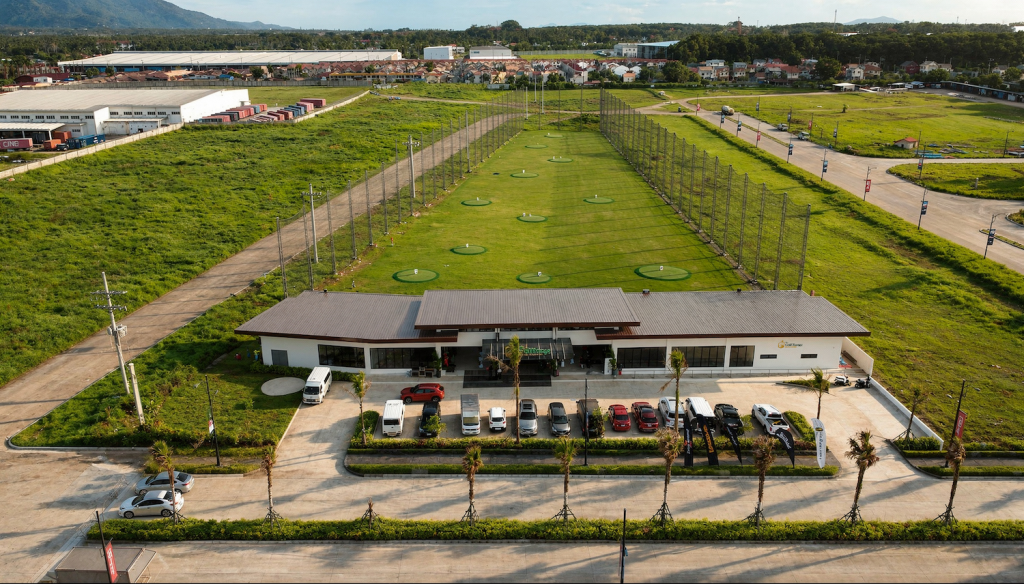
This thinking is visible in LIMA Estate, where industrial locators coexist with retail districts, transport systems, educational institutions, sports facilities, workforce housing, and residential communities.
The model reflects a growing understanding that economic estates today are no longer just places of production—they are increasingly becoming environments where people can live, work, and grow through different stages of life. “So when it comes to housing, we try to address them at the life stage that they’re at,” Fernandez de Mesa shared. “If they are a new entrant into the job market… we have a rental solution for them. As things evolve over time… we also have a solution for that through our mid-market housing.”
Employment as the real metric
While expansion figures remain important, Fernandez de Mesa believes the true measure of success lies in whether economic estates are generating jobs and attracting operating businesses.
Using LIMA Estate as an example, he shared how the development expanded from under 400 hectares to around 1,100 hectares over the last decade, while operating companies grew from 50 to about 135. Employment meanwhile increased from 20,000 workers to nearly 80,000 today.
“So it’s not a promise of potential or a future—it’s real,” he said. “Our economic estates are basically where the investment is materialized into employment.”
Beyond infrastructure, Fernandez de Mesa noted that talent development is also becoming increasingly important in attracting locators competing globally for skilled workers.
“We’re now working with Batangas State University here in LIMA Estate to basically develop the talent in the area by putting a university within this ecosystem where we can have industry-based learning,” he shared.
LIMA Estate
- PEZA-registered industry-anchored estate located in Lipa City and Malvar, Batangas
- Largest privately-owned industrial estate in the Philippines spanning 1,100 hectares
- Hosts around 200 multinational manufacturing and export-oriented companies
- Generated approximately 75,000 jobs
- Integrates industrial, commercial, residential, institutional, and recreational components
- Home to Biz Hub, Batangas’ first industry-driven central business district
- Features educational institutions, workforce housing, transport systems, sports facilities, retail spaces, and residential communities within one ecosystem
- Connected through SLEX, STAR Tollway, Batangas Port, and major South Luzon transport corridors
- Includes estate-wide power, water, telecommunications, and transport infrastructure
- Continues to expand through industrial, commercial, and infrastructure developments
The northward shift of industrial growth
As Southern Luzon’s industrial corridors mature, Aboitiz is now applying the same integrated model in Central Luzon through TARI Estate in Tarlac.
Fernandez de Mesa sees this not as a replacement for Southern Luzon, but as the next phase of the country’s industrial expansion.

“Southern Luzon has historically been the industrial base of the Philippines,” he said. “And over the last 10 years, we’ve been expanding, and it’s reached a point of saturation. So it’s only natural that the next phase of growth will come in Central Luzon, where the infrastructure is going, where there’s available land to develop.”

That momentum is already beginning to materialize in TARI Estate. Fernandez de Mesa shared that major locators have started construction within the development, signaling the early stages of long-term job creation and industrial activity in the region. “Coca-Cola has already begun its construction. Ajinomoto recently broke ground as well,” he said. “So the catalyst for the job creation is there.”

He added that stronger industrial systems across multiple regions can make the country more competitive for global investors. “When you look at it together, what that means is that the Philippines is creating a larger critical mass of an industrial base with a more robust supply chain, which in turn makes it more attractive for new investors to come in,” he explained.
TARI Estate
- 384-hectare industry-anchored estate in Tarlac positioned as Central Luzon’s next major industrial growth corridor
- First 90-hectare phase fully developed and sold out
Expected to generate 60,000 jobs - Strategically connected to NLEX, SCTEX, TPLEX, Clark International Airport, and Subic Bay Freeport
- Major locators include Coca-Cola Europacific Aboitiz Philippines and Ajinomoto Philippines
- Developed as an extension of the country’s growing industrial base beyond Southern Luzon
- Designed to support large-scale manufacturing expansion through integrated infrastructure and operational systems
- Supported by Central Luzon’s strong GDP growth, labor force, and infrastructure expansion
- Positioned to help drive the next phase of Philippine industrialization and regional economic growth
The Philippines’ role in a changing global landscape
As geopolitical tensions and supply chain disruptions continue to reshape global manufacturing decisions, Fernandez de Mesa believes the Philippines is entering an important moment.
“I think these disruptions are becoming more and more frequent,” he said. “But I feel that in the industrial sector, it plays to the advantage of the Philippines because companies will need to diversify their risk further, which means spreading their eggs into more baskets.”
Rather than comparing the country directly with neighboring economies, he believes the Philippines must better understand its own role within the regional supply chain.
“We should stop comparing ourselves and focus more on what are the good things that we have to offer these companies,” he said.
For Fernandez de Mesa, industry-anchored townships ultimately go beyond real estate development. They represent a more integrated way of building long-term economic growth—where employment, infrastructure, education, housing, and daily life evolve together.
“Our model is a little bit different because we no longer view ourselves as a developer,” he said. “We view ourselves as a solutions provider.”
#PhilSTARPropertyFeature
#FeaturedStory